
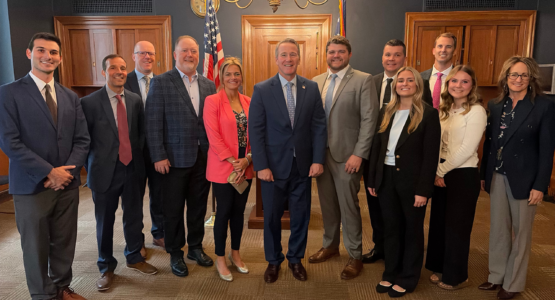

The 2026 election cycle is shaping up to be one of the most consequential and expensive political seasons Ohio has seen in years. Through their votes in the U.S. Senate and Governor races, Ohioans will help determine the direction of public policy at both the federal and state levels. For independent agents, these elections are more than campaign ads and political headlines; the outcomes have the potential to influence the regulatory environment and impact Ohio’s overall business climate for years to come.
OIA Government Affairs remains focused on engaging with candidates, advocating for issues important to independent agents, and providing our members with reliable information on candidate positions. As this election season intensifies, our goal is to help keep you informed on the races, issues, and policy debates that matter most to your business and your role as an informed voter.
U.S. Senate Race: Husted vs. Brown
One of the most closely watched races in the country is Ohio’s U.S. Senate contest between Senator Jon Husted and former U.S. Senator Sherrod Brown. This race has drawn significant national attention and substantial campaign spending, making it one of the most competitive races in the nation.
Senator Husted has emerged as a prominent voice on several business-related issues, including his co-sponsorship of the Tackling Predatory Litigation Funding Act , aimed at closing a tax loophole by taxing third-party litigation financiers. On the state level, the Ohio Legislature took action to reform third party litigation funding (TPLF) with the passage of House Bill 105. This bill made reforms including requiring litigation financiers to register with the Attorney General’s Office, prohibiting foreign investment in Ohio lawsuits and requiring disclosure of litigation financing agreements after a case is resolved. It is important to see other states and electeds in the federal government look at reforming TPLF. Litigation funding reform remains an important topic across the country because of its potential impact on claims costs and legal transparency.
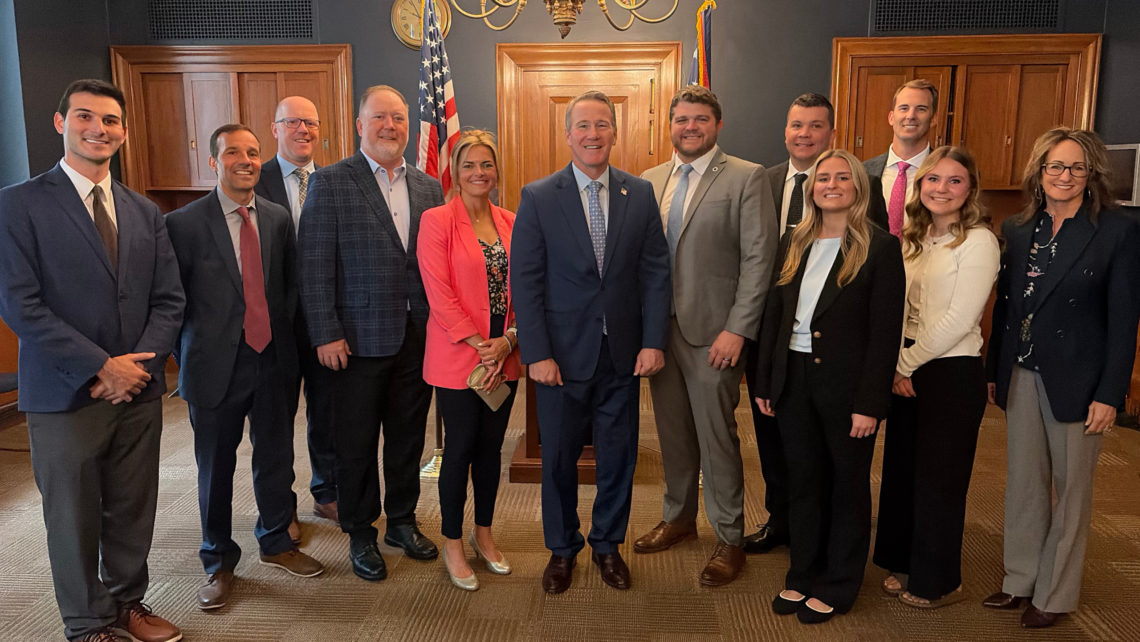
During our annual Big “I” Legislative Conference in Washington, D.C., OIA Government Affairs and our members had the opportunity to meet with Senator Husted and discuss TPLF reform and other issues important to Ohio businesses and insurance professionals.
Former Senator Sherrod Brown brings a different perspective to the race. Brown served in the U.S. Senate from 2007 until early 2025 and built a reputation for focusing on issues affecting working families, organized labor, and retirement security. Throughout his tenure, he often emphasized policies intended to support middle-class Americans and strengthen consumer protections.
The contrast between the candidates has created a highly contested race that highlights differing views on economic policy, regulation, and the federal government’s role in overseeing various industries. Given the amount of money being spent by the candidates, political parties, and outside organizations, Ohioans can anticipate a slew of campaign commercials up to Election Day.
The Governor’s Race: Acton vs. Ramaswamy
At the state level, Ohio’s gubernatorial race is drawing equal attention. The contest between Dr. Amy Acton and Vivek Ramaswamy presents voters with two candidates from very different professional backgrounds.
Dr. Acton is known for her service as Ohio’s Director of Health during the COVID-19 pandemic. Prior to that role, she spent years working in public health and healthcare policy. Her background gives her experience in public service and public health administration.
Ramaswamy, a businessman from the Cincinnati area, first gained national attention during his campaign for president in the 2024 Republican primary. He has built his campaign around economic growth, business development, and Ohio’s long-term competitiveness.
Through its efforts to support pro-business policies and candidates, the Ohio Chamber of Commerce Political Action Committee ultimately endorsed Vivek Ramaswamy, citing his vision for strengthening Ohio’s economy and creating an environment where businesses of all sizes can grow and succeed. The race has also attracted support from another influential business organization, the Ohio Manufacturers’ Association PAC, who endorsed Ramaswamy and highlighted his focus on strengthening Ohio’s manufacturing economy.
Dr. Amy Acton, meanwhile, has assembled a coalition that includes support from organized labor and public sector organizations. Among her notable endorsements are the United Auto Workers and the Ohio Association of Professional Fire Fighters, groups that have emphasized her commitment to working families and community investment.
These endorsements offer voters a clearer picture of the constituencies aligned with each candidate and underscore the differing visions being presented for Ohio’s future as the gubernatorial campaign continues to intensify. OIA Government Affairs and our membership have had opportunities to engage with both candidates through various forums and events throughout the campaign.
Regardless of political affiliation, there is little doubt that the governor’s race will remain highly competitive. Ohio voters are seeing extensive advertising from both campaigns, and the intensity is expected to increase as Election Day approaches.
Ohio Supreme Court Races: An Often-Overlooked Election
While the statewide races for U.S. Senate and Governor will dominate headlines, Ohio’s Supreme Court elections will also have a major influence on the state’s legal and business environment.
OIA is supporting Justice Hawkins in his re-election bid against Common Pleas Judge Marilyn Zayas and candidate Colleen O’Donnell in her race against incumbent Justice Jennifer Brunner. OIA views these races as especially important because of the long-term role the Court plays in Ohio’s legal and business environment.
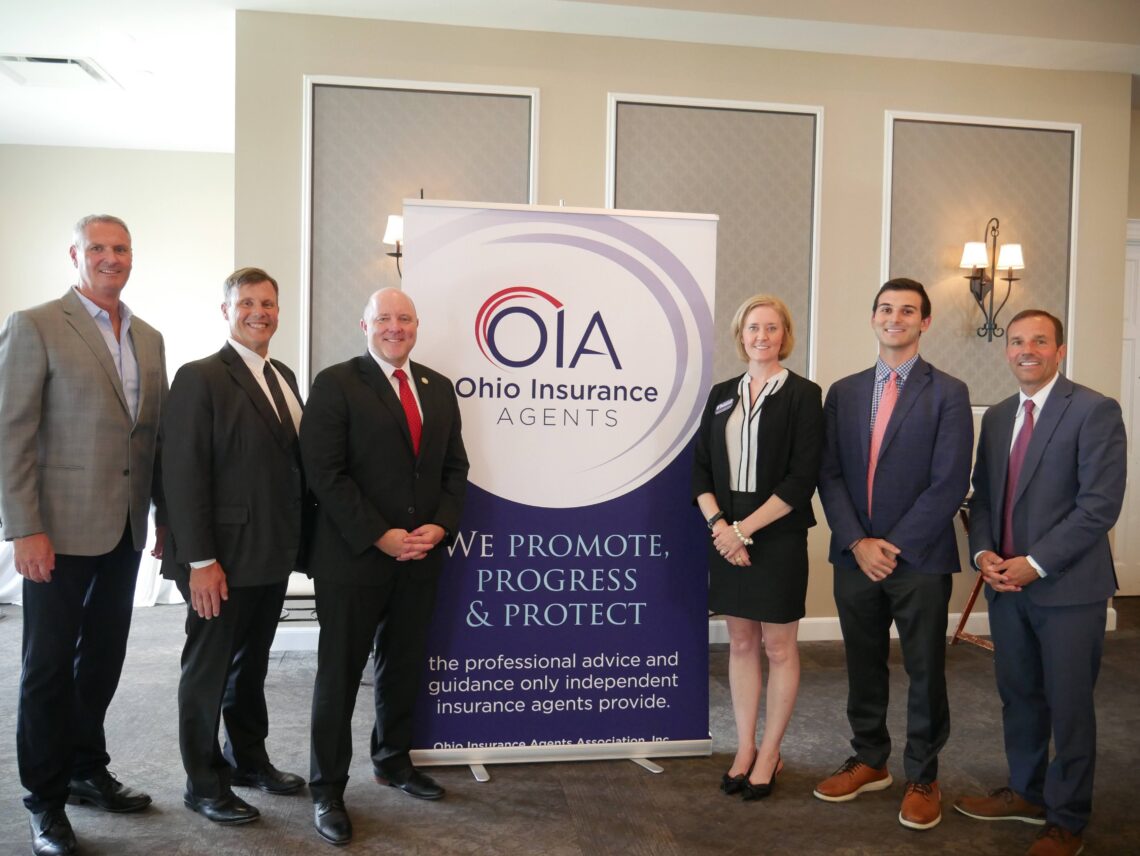
In June, OIAPAC hosted a Supreme Court reception that gave our membership the opportunity to connect with these candidates and learn more about their respective judicial philosophies. OIAPAC made significant contributions to both candidates, and we are incredibly grateful for all the agents who participated and for those who supported these candidates with personal contributions.
For many voters, judicial elections receive far less attention than races for Governor or Congress. However, these contests can have a significant impact on Ohio’s legal climate for years to come. The Ohio Supreme Court serves as the final arbiter of disputes involving state law, business regulation, contract interpretation, workers’ compensation issues, insurance-related matters, and other significant issues affecting Ohio residents and businesses. Its decisions establish precedents that affect employers, insurers, and consumers across the state.
From the perspective of the business and insurance community, one of the most important qualities in a jurist is a commitment to judicial restraint. Judicial restraint is the principle that judges should interpret and apply the law as written, rather than creating new policy through court decisions. In contrast, judicial activism is viewed as an approach in which courts take a more expansive role in shaping public policy.
Supporters of judicial restraint argue that a predictable legal environment allows businesses and insurers to better plan for the future. When laws are interpreted consistently and according to established legal principles, employers and insurers can operate with greater certainty regarding their obligations and potential liabilities.
Ohio has long been regarded as one of the nation’s most competitive insurance markets. A key factor behind that success has been our state’s relatively stable and predictable legal environment. Businesses considering investment in Ohio often look not only at tax and regulatory policies but also at the consistency of our judicial system. Court decisions that are grounded in established legal principles rather than changing political or social currents help foster confidence among employers, insurers, and investors.
For independent agents, these judicial races may seem less visible than the contests for Senate or Governor, but their impact can be equally significant. Supreme Court decisions can influence litigation trends, insurance costs, liability exposure, and the overall business climate. The Justices elected in 2026 will help shape Ohio law for years to come, making these races important for anyone who values a stable, competitive, and business-friendly marketplace.
The Hot Button Issues Shaping the Debate
Several major issues have been defining Ohio’s political discussion over the recent months.
Economic growth remains at the forefront of many conversations, particularly as policymakers debate how to attract and retain employers while creating opportunities for Ohioans and their families. The expansion of data centers across the state has generated excitement over new investment while also stirring up community concern and frustration about energy demand and infrastructure needs.
Utility costs and affordability have become growing concerns for households and businesses alike. Rising energy expenses, coupled with broader cost-of-living challenges, have been central themes throughout the campaign season.
Voters will also be evaluating competing visions for Ohio’s economic future. Questions surrounding workforce development, infrastructure investment, housing affordability, healthcare availability, and business competitiveness are expected to play significant roles as candidates make their case to the electorate.
Closing Thought
When independent agents think about elections, it is easy to focus solely on the candidates at the top of the ticket. However, the decisions made by our Senators, Governor, state legislators, and Supreme Court Justices all play a role in shaping the environment in which Ohio businesses operate. Whether the issue is federal regulation, state insurance oversight, economic development, litigation reform, or judicial philosophy, the outcome of the 2026 elections will have meaningful implications for Ohio’s insurance industry and the clients you serve every day.
For independent agents, staying informed is not simply a civic responsibility. It is a business imperative. Please reach out to George Christy at george@ohioinsuranceagents.com or at (614) 929-8237 with any questions on the upcoming elections or OIA’s advocacy efforts.
About the Author:

George Christy joined the Ohio Insurance Agents (OIA) as the new Government Affairs Manager in January 2025. George brings experience from his previous roles at the Ohio Department of Transportation (ODOT). At ODOT, he was part of the communications team, and he worked on legislative and regulatory issues with the Legislative Affairs team. George brings experience from his work on state legislative campaigns, his time as a Legislative Aide in the Ohio House of Representatives, and his roles at a state agency. George grew up in Delaware County and is a graduate of The Ohio State University where he studied Political Science and Economics.