
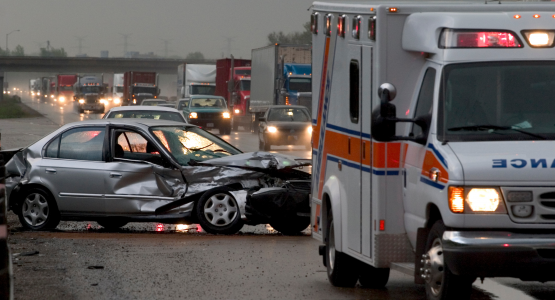

As an independent agent, you will inevitably face calls you wish you never had to answer. Unfortunately, some of those calls come after a client has experienced a devastating auto incident. These situations can become even more challenging when you discover that the other driver is uninsured or only carries the state minimum limits for auto coverage.
In Ohio, the current minimum limits for bodily injury and property damage are $25,000 per person for bodily injury, $50,000 per accident for bodily injury, and $25,000 per accident for property damage. These minimum limits help lower-income individuals obtain auto insurance while remaining compliant on the road. Unfortunately, there are many scenarios where a bodily injury claim surpasses these minimums and leaves insureds in a vulnerable position.
This concern has prompted legislative action in Ohio. Recent legislation – House Bill 596, sponsored by Representatives Mohammed and Williams – aims to require all motor vehicle insurance policies to include uninsured motorist coverage and to increase the state’s minimum liability insurance requirements for bodily injury from 25/50 to 50/100.
We have a serious uninsured motorist problem in our state. According to the Insurance Information Institute, 18.5% of drivers in Ohio are uninsured. It is illegal to operate a vehicle in our state without meeting financial responsibility requirements (ORC 4509.101), yet we continue to have Ohioans who take the major risk of driving uninsured. Supporters argue that requiring UM coverage in Ohio would create stronger protections for law-abiding drivers.
If Ohio were to implement a requirement for all motor vehicle coverage to include uninsured motor vehicle coverage, we would be joining 22 other states that currently have this law in place. This requirement would provide greater financial stability and help prevent victims from absorbing costs caused by someone else’s negligence. Additionally, increased UM claims would reduce the strain on the state’s legal system by minimizing litigation involving uninsured motorists. This mandate could also protect lower income individuals from financial ruin when they are involved in an incident. Despite the potential benefits of this mandate, it does not come without challenges.
Requiring uninsured motorist coverage will impact premiums for Ohioans. Currently, Ohio is one of the most competitive and affordable auto insurance markets in the country. According to Forbes, in 2025 the average annual cost for full coverage was $1,422 and the average cost of minimum limits was $365. Ohio provides one of the most affordable minimum coverage options for lower-income individuals. If we require uninsured motorist coverage on all auto policies including state minimum coverage, lower-income Ohioans would be subject to increased premiums.
The other key component of House Bill 596 is the increase in bodily injury liability limits from $25,000/$50,000 to $50,000/$100,000. These new BI limits would be among the highest state minimums in the nation. If Ohio were to adopt this change, we would join Alaska, Maine, Michigan, North Carolina and Virginia as the only states with these higher BI minimums. North Carolina was the most recent state to increase their limits to 50/100 when they implemented their new law on July 1, 2025.
If Ohio implemented increased state minimums for BI, we would see better financial protection for victims of accidents. When calling your clients, you could notify them that a benefit of higher limits would be more money available to go toward surgery for their broken arm or leg, if they were to get in an accident. Additionally, this increase would modernize our minimums, address rising medical costs, and lead to less cost shifting going to taxpayers when remaining costs could fall on Medicaid or public hospitals. Despite these positive changes, this requirement would lead to an increase in premiums in Ohio. There are estimates that the North Carolina law will lead to an increase in $47 in annual premiums for statewide minimum coverage. We would argue that this additional cost for far more coverage could be something that benefits everyone.
Overall, requiring uninsured motorist coverage on every auto policy in the state and raising Ohio’s minimum liability limits could create meaningful benefits for the traveling public. These changes would strengthen financial protections but would also result in higher state minimum premiums. We recognize that the uninsured and underinsured motorist issue in Ohio is a serious concern and ensuring that your clients are better protected on the road is a priority. At the same time, any proposal that increases costs for consumers must be approached thoughtfully and with careful consideration.
House Bill 596 has yet to be heard in the Ohio House Insurance Committee. OIA will be tracking the status of this legislation when the General Assembly resumes in 2026. OIA Government Affairs will be taking this legislation to the OIA Advocacy Committee for their insights and feedback on this bill.
Please contact George Christy, OIA’s Government Affairs Manager, at george@ohioinsuranceagents.com if you would like to discuss House Bill 596 or any advocacy issues.
Sources:
Car Insurance Rates by State for 2025 – Forbes Advisor
Revealed – US States that Require Uninsured Motorist Coverage | Insurance Business
North Carolina’s 2025 Auto Insurance Law Changes: What Drivers Need to Know
About the Author:

George Christy joined the Ohio Insurance Agents (OIA) as the new Government Affairs Manager in January 2025. George brings experience from his previous roles at the Ohio Department of Transportation (ODOT). At ODOT, he was part of the communications team, and he worked on legislative and regulatory issues with the Legislative Affairs team. George brings experience from his work on state legislative campaigns, his time as a Legislative Aide in the Ohio House of Representatives, and his roles at a state agency. George grew up in Delaware County and is a graduate of The Ohio State University where he studied Political Science and Economics.