

The uninsured motorist problem in Ohio continues to take a significant toll on drivers across our state. As an independent agent, you understand the risks your clients face when they encounter an uninsured driver on the road. While you are ready to help your client recover in the event of a crash, the sheer number of uninsured drivers increases the likelihood that you and your clients will continue to face these difficult and costly situations.
Today, Ohio’s uninsured motorist rate is estimated at 18.5% – the 12th highest in the country. This is not a statistic we can ignore. Despite the magnitude of this problem, Ohio has no true auto insurance enforcement mechanism. Instead, individuals simply self-attest to having coverage at the Bureau of Motor Vehicles (BMV). That process is antiquated and insufficient. We must do more to safeguard our roadways and ensure that drivers in Ohio are following the law.
Fortunately, meaningful progress is underway through the introduction of House Bill 678, which would establish an Online Insurance Verification System (OIVS) in Ohio. This system would provide a modern, reliable way to confirm that drivers are maintaining financial responsibility and will help reduce the uninsured motorist rate in our state.
Legislative Details
House Bill 678 would enable the State of Ohio to create an online verification system through the BMV or through a contracted third party that collaborates with the BMV. If Ohio is to create a verification system, we would join over 20 states that utilize these enforcement mechanisms. HB 678 requires that the system can verify insurance status in real-time and that it is able to send requests to insurers to verify a driver is insured.
One meaningful, yet simple, step accomplished by House Bill 678 is that at the point of vehicle registration, drivers would be asked for proof of insurance with a system capable of verifying on the spot. You might ask, “What happens if my insurance does not appear in the system?” In that case, drivers can present an insurance card or another form of financial responsibility to the BMV staff to verify that they are insured.
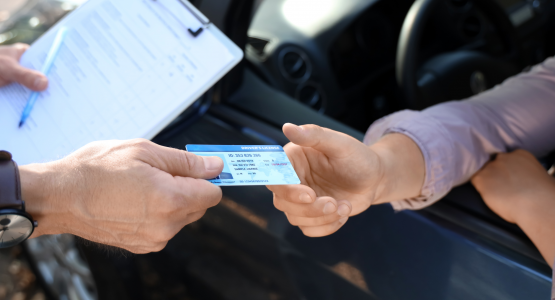
House Bill 678 also enables law enforcement to utilize OIVS during a traffic stop. This additional layer of verification will help our law enforcement officers promote safer roadways. If enacted, law enforcement officers would be able to make an inquiry via the financial responsibility verification system before having to ask for an insurance card. Most folks would likely agree that it would be better to have their insurance verified on the spot rather than having to dig through a packed glovebox for their insurance card.
This legislation takes meaningful action to ensure that individuals are insured at multiple points in the cycle: at the point of vehicle registration and in the event of a traffic stop.
Through OIA Government Affairs research we have found that states who create an online verification system, and combine that with strong enforcement mechanisms, have seen their insured motorist rate decrease.
Success in Other States
The harsh reality of the uninsured motorist issue is that the verification system can identify the issue, but it also takes strong enforcement to tackle the uninsured motorist rate. For example, Arkansas launched its online verification system in 2020 with strong enforcement mechanisms such as an automatic letter and a $100 reinstatement fee for lapsed policies. Arkansas had an uninsured motorist rate of 16% prior to implementation, but it has since dropped to a 12.1% rate. That rate represents thousands of newly insured drivers on the roadway.
West Virginia is another example of a state that integrated verification with the DMV and law enforcement, and through strong enforcement tools like suspension for non-response to verification notices, the state has achieved a 2.7% reduction in its uninsured motorist rate. West Virginia now boasts an uninsured motorist rate of 7.8%, which is over 10% lower than Ohio, despite the poverty challenges the state faces.
Enforcement in Ohio
If enacted, HB 678 has strong enforcement mechanisms that help to ensure that individuals do not skirt the financial responsibility laws. Through the operation of the online financial responsibility system, if it is determined that a person does not have proof of auto insurance, they must correct that or face the potential of having their driver’s license suspended and their license plate impounded. Additionally, individuals who do not follow the law would have to pay a reinstatement fee to get legal.
These enforcement measures tied with an online verification system will help reduce the uninsured motorist rate in Ohio in a meaningful way.
OIA Support
OIA is proud to support this legislation. We are happy to see this issue being addressed at the Ohio Statehouse. Creating an online verification system in Ohio would offer real-time verification, strengthen enforcement of financial responsibility laws, and help reduce the uninsured motorist rate in our state. We look forward to testifying in support of this legislation and would welcome any members who are interested in offering a written testimonial in support. Please reach out to George Christy at george@ohioinsuranceagents.com with any questions, feedback, or support.
Sources:
https://www.iii.org/fact-statistic/facts-statistics-uninsured-motorists
About the Author:

George Christy joined the Ohio Insurance Agents (OIA) as the new Government Affairs Manager in January 2025. George brings experience from his previous roles at the Ohio Department of Transportation (ODOT). At ODOT, he was part of the communications team, and he worked on legislative and regulatory issues with the Legislative Affairs team. George brings experience from his work on state legislative campaigns, his time as a Legislative Aide in the Ohio House of Representatives, and his roles at a state agency. George grew up in Delaware County and is a graduate of The Ohio State University where he studied Political Science and Economics.